
When a contractor or distributor orders a bathroom vanity, the conversation often revolves around the cabinet finish or the sink material. However, the most common installation headache comes from the plumbing: P-Trap vs. S-Trap.
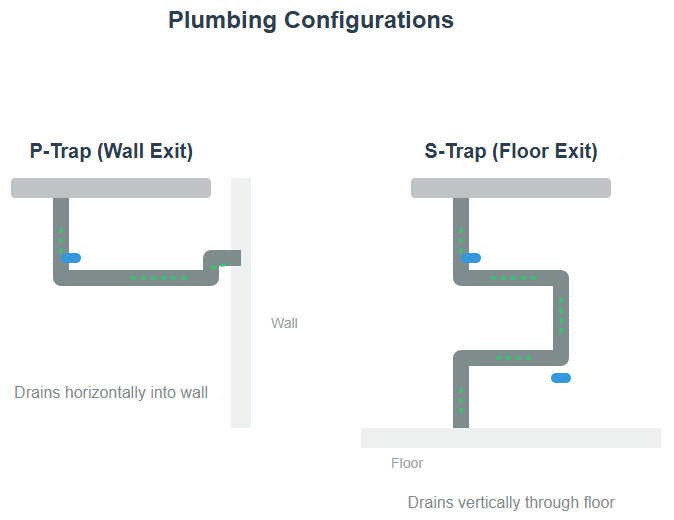
If you specify the wrong drainage type, the vanity will not fit flush against the wall. Here is the technical breakdown every buyer and installer should know.
What is a P-Trap?
A P-Trap is the standard plumbing configuration where the drainpipe goes horizontally into the wall behind the vanity. The pipe itself forms a “P” shape beneath the sink to hold water (which prevents sewer gases from rising).
In North America and most Western markets, P-Traps are the standard. However, the vanity must have an “open back” or a cutout to accommodate the pipe going directly into the wall.
What is an S-Trap?
An S-Trap is used when the drain pipe goes vertically down through the floor, rather than into the wall. The pipe forms an “S” shape under the sink.
S-Traps are common in older buildings, as well as in certain European and Asian markets. If your project has floor drainage, you must order a vanity with an S-Trap configuration.
How to Avoid Ordering the Wrong Vanity
Before placing your container order, always ask your contractors or project managers two questions:
- Does the water waste pipe exit through the wall or the floor?
- What is the exact height of the pipe from the floor?
At TOPBATH, our vanities can be customized for either configuration. For our North American cUPC certified lines, we leave the back open for standard P-Traps. For other markets, we can adjust the internal structural panels to hide an S-Trap where possible.
Key Installation Tips
- P-Trap: Ensure the vanity’s internal drawer design leaves enough clearance for the plumbing. Otherwise, the drawer will hit the pipe.
- S-Trap: This requires cutting a hole in the bottom shelf of the vanity. Make sure the material of the vanity (e.g., MDF vs. Plywood) can withstand potential minor moisture exposure.